

Quick answer
The best anti-aging skincare products are not necessarily the most expensive or the strongest. A useful shortlist starts with sunscreen and moisturizer, then considers targeted products such as vitamin C or retinoids according to skin needs and tolerance. This research-led guide explains the categories to compare and how to evaluate claims.
The most useful skincare products are the ones that fill a real need in your routine. For many adults with mature skin, that means a comfortable moisturizer and broad-spectrum sunscreen first, followed by a carefully chosen treatment for a specific concern.
*Affiliate disclosure:* Some product links on this site may earn us a commission at no additional cost to you. This guide is based on editorial research; we do not claim firsthand product testing.
Best Anti Aging Skincare Products: What to Compare

When considering best anti aging skincare products, look at the full context: your current routine, individual tolerance, product instructions, and the strength of supporting evidence. Choose an approach that fits your needs rather than treating any one ingredient or product as universally necessary.
Daily protection — Broad-spectrum SPF 30+ sunscreen; Wearability, directions, skin tolerance.
Dryness or tightness — Moisturizer with humectants and emollients; Texture, fragrance, barrier-supporting ingredients.
Barrier comfort — Ceramide-containing moisturizer; Overall formula, not just one featured ingredient.
Uneven-looking tone — Vitamin C serum; Vitamin C form, packaging, tolerance.
Texture and photoaging — Retinol-containing cosmetic product; Label instructions and irritation potential.
1. Sunscreen: the daily foundation
Sun protection deserves a place in nearly every routine. Choose broad-spectrum SPF 30 or higher and a format you are willing to use as directed. A comfortable sunscreen is more useful than a high-priced option left unopened. Pair this section with the morning routine.
2. Moisturizer: choose for your skin, not just its age
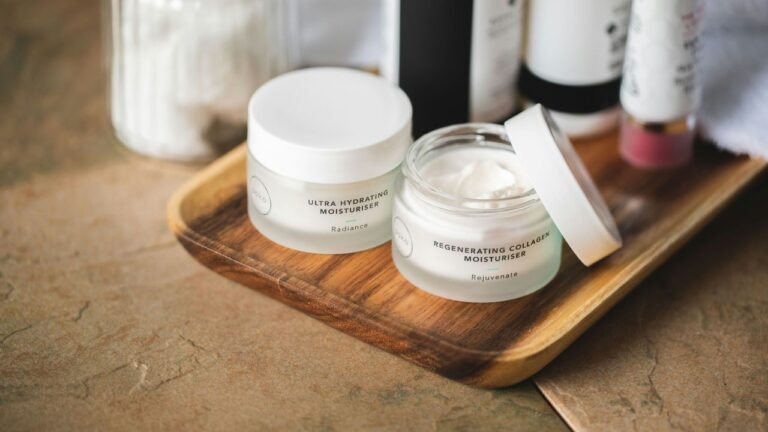
A moisturizer may combine humectants, emollients and occlusives. If your skin feels dry, read our moisturizer guide; if barrier support is the goal, explore the ceramide cream comparison.
3. Vitamin C: compare formulations
Vitamin C is used in products aimed at antioxidant support and uneven-looking tone. Formulation and packaging matter, and higher percentages are not inherently better. See our vitamin C serum picks for a need-based comparison.
4. Retinoids: understand the differences
Retinol cosmetics and prescription tretinoin are not interchangeable. Both require realistic expectations about irritation and gradual changes. Consult our retinol versus tretinoin guide and retinol sensitivity guide before considering how retinoids might fit into a routine.
How We Research Anti-Aging Skincare Products
We review available ingredient lists, manufacturer documentation, intended use, packaging information, relevant skincare research and patterns in publicly available customer feedback. We do not personally test every product, independently verify every brand claim or treat customer reviews as clinical evidence. Confirm current ingredients, availability and price with the retailer before purchasing.
Mistakes to Avoid When Buying Anti-Aging Skincare
Do not pay more solely because a jar says “anti-aging.” Avoid buying several new treatments at once, and do not assume a product is suitable for your skin because it worked for a reviewer. Use our routine order guide to see how product roles fit together.
How to Compare the Best Anti-Aging Skincare Products Fairly
A useful product roundup should explain why each option appears, not simply repeat marketing copy. For any shortlisted item, record the primary skin need, the formula’s notable ingredients, potential irritants such as fragrance, packaging, price range when verified, and who may reasonably prefer a different texture. Compare like with like: a rich barrier cream and a lightweight antioxidant serum do different jobs and should not be ranked as if one replaces the other.
Anti-Aging Skincare Product Evaluation Checklist
What role does the product serve? — Prevents buying duplicates; Identify whether it is cleansing, hydration, treatment or sun protection.
What does the complete ingredient list show? — Marketing spotlights are incomplete; Review current manufacturer or retailer listing.
Is it suitable for your comfort preferences? — Fragrance, texture and finish affect usability; Consider tolerability and application feel.
How transparent is the evidence? — Anecdotes are not controlled studies; Separate published evidence from customer opinion.
What will it cost over time? — Skincare is a recurring purchase; Compare approximate amount used and container size.
Reader scenarios: selecting the right category
If dryness is the main concern: start with your moisturizer and cleanser before purchasing a treatment serum. Look for a formula combining water-binding and softening ingredients, then decide whether a separate serum adds a meaningful benefit. If uneven tone is the priority: understand the limitations and forms of vitamin C rather than selecting the highest advertised percentage. If treatment products feel uncomfortable: address tolerance and routine simplicity before adding another active. If the routine is already working: you may not need a new purchase at all.
Where product recommendations fit in the buying journey
A commercial page should connect to educational content in both directions. The article on vitamin C serums links back to the morning-routine guide; the ceramide comparison links to the barrier-repair article; the retinol explainer links to the sensitivity guide. Readers can learn what an ingredient does before deciding whether a purchase is useful. This structure also helps avoid making the same claims across several nearly identical roundup pages.
What our picks do not mean
A researched selection is not a guarantee of results or a claim that our team conducted a laboratory test. Product formulas may change. Retailers may list different packaging for different markets. Where prices, labels or stock levels are important, confirm them at the destination retailer. A reader with persistent or severe skin concerns should seek qualified advice rather than relying on a product roundup for treatment decisions.
FAQs
What product should come first? For a basic daytime routine, moisturizer and sunscreen are stronger starting points than a collection of optional serums.
Do expensive products always work better? No. Formula suitability and consistent use matter more than luxury branding alone.
Where are the purchase links? Add current, approved retailer links only after checking product details and affiliate-program rules.
How to evaluate product recommendations responsibly
The phrase “best anti-aging product” covers different jobs. Sunscreen helps protect against ultraviolet exposure, moisturizers address dryness, and optional antioxidant or retinoid products may target different goals. Rather than treating all these as directly interchangeable, compare them within their intended use. The American Academy of Dermatology’s advice for healthier-looking skin identifies broad-spectrum SPF 30 or higher as a central preventive step.
Compare any product by its stated function, complete ingredient list, fragrance and sensitivity considerations, packaging, availability in your country and total cost. UltimateSkinPicks does not personally test the listed products, so avoid interpreting “editorial pick” as a verified clinical ranking.
Are more expensive products always more effective? No. Price alone does not establish skin compatibility, clinical benefit or better value.
Editorial standards and affiliate disclosure
UltimateSkinPicks creates research-informed editorial guidance. We do not personally test or clinically evaluate products unless a specific article explicitly documents such testing. Some future retailer links may be affiliate links, which can earn a commission at no extra cost to the reader. We aim to distinguish manufacturer claims, consumer experiences and established clinical evidence. For the basics of building a sustainable routine, consult the American Academy of Dermatology skincare advice.